
 Call buy:

 Vietnamese
 English
Market News
Vietnam’s Export Banana Varieties
In recent years, Vietnam’s banana exports have experienced remarkable growth. This achievement is largely attributed to improved product quality and stricter control over commercial standards, enabling Vietnamese bananas to comply with diverse export requirements across multiple international markets.
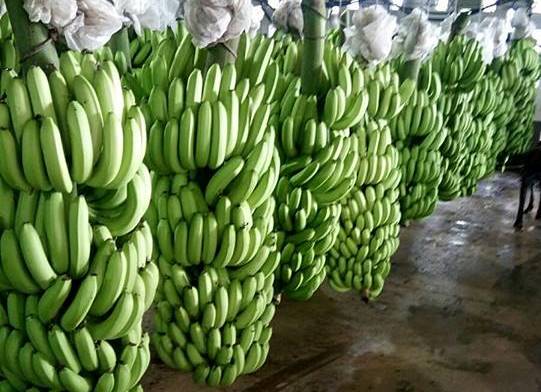
When discussing export bananas, most people are familiar only with Cavendish (Nam Mỹ) bananas. However, Vietnam also exports several other banana varieties. Let’s explore the most popular export banana varieties of Vietnam together with Vietplants.
Cavendish (Nam Mỹ) Bananas for Export
Among Vietnam’s export banana varieties, Cavendish bananas undeniably hold the leading position. Vietnam produces a large volume of Cavendish bananas, meeting both domestic and international demand. For export alone, this variety accounts for over 90% of Vietnam’s total banana export volume and is also the most widely cultivated commercial banana variety worldwide.
Advantages
Suitable for large-scale cultivation
High yield and attractive fruit appearance
Rich nutritional value
Long shelf life, ideal for long-distance transportation
Highly rated quality, meeting consumer preferences in many markets
Disadvantages
Severely affected by Panama wilt disease, causing significant losses in yield and quality
Requires high technical standards in cultivation and strict fruit grading criteria
Export Markets
Primarily exported to China. In recent years, with improved quality, Vietnamese Cavendish bananas have successfully entered more demanding markets such as South Korea, Japan, Russia, the Middle East, and several European countries.
Export Models
Many growers cooperate under contract farming with Dole (the world’s largest banana producer) for technical support and stable output markets
- Vietnamese enterprises also export under their own brands such as Unifarm, among others
- Panama Disease-Resistant Cavendish Bananas for Export
Due to the widespread impact of Panama wilt disease caused by Fusarium oxysporum f. cubense (Foc), banana-growing areas in Vietnam and many other countries have suffered severe damage. As there is currently no complete biological or chemical cure, planting disease-resistant varieties is the most effective solution.
Advantages
- High resistance to Panama disease (over 95%)
- Superior and stable yields across generations
- Attractive fruit appearance without MS (rust disease on fruit skin)
After years of research and field trials, Panama-resistant Cavendish varieties are now widely cultivated to replace conventional Cavendish bananas in infected soils. Many Vietnamese enterprises are exporting these bananas to China, Japan, South Korea, and other markets.
Laba Bananas for Export
Vietnam’s Laba banana exports are showing very positive growth in both volume and value. This variety has significantly contributed to economic development in Lam Dong Province, where bananas are cultivated under VietGAP standards, meeting strict market requirements such as those of Japan.
Advantages
- Similar shape to Cavendish bananas
- Distinctive aroma, soft texture, and attractive appearance
Disadvantages
Export volume remains lower than Cavendish due to limited growing areas
Export Markets
Primarily exported to Japan, and gradually expanding to the United States, South Korea, Malaysia, and other demanding markets.
Pink Banana (Chuối Tiêu Hồng) for Export
Advantages
- Pleasant aroma and taste
- Attractive appearance
- Long shelf life
- Disadvantages
- Mainly cultivated in Northern Vietnam
- Limited production volume
Export Markets
Primarily exported to China.
Pisang Awak / ABB Bananas (Chuối Sứ – Xiêm – Mốc – Tây Thái) for Export
Advantages
- Easy to cultivate
- High yield
- Resistant to pests and diseases
Disadvantages
- Inconsistent fruit appearance
- Thick peel, less competitive in premium markets
- Lower economic value compared to Cavendish bananas
Export Markets
- Fresh bananas exported in small volumes to China
- Processed and frozen bananas mainly exported to Europe, the United States, and the Middle East
Royal Bananas (Chuối Ngự) for Export
Royal bananas are a specialty variety from Northern Vietnam, notably Dai Hoang bananas from Ninh Binh Province. With historical origins dating back to the Tran Dynasty, this variety was traditionally offered to kings and is therefore known as the “royal banana.”
Advantages
- Uniform, round fruit with distinctive tips
- Golden-yellow peel when ripe
- Bright yellow flesh, mild aroma, naturally sweet, firm texture
Disadvantages
- Small fruit size and thin peel
- Lightweight, making long-distance transportation costly
- Limited production volume unsuitable for large industrial orders
Export Markets
Mainly exported as a specialty product to niche markets such as Japan, South Korea, and the EU.
Current Situation of Vietnam’s Banana Exports
Bananas are currently one of Vietnam’s key export fruits, with cultivated areas expanding rapidly, dominated by Cavendish bananas.
In 2024, Vietnam’s banana export value reached USD 378.1 million, ranking 9th globally. During the first two months of 2025, export volumes continued to grow strongly compared to the same period in the previous year.
With expanding cultivation areas and the availability of UNI 126, a Panama disease–resistant banana variety, Vietnam’s banana industry is well-positioned to combat the devastating impacts of Panama disease. This breakthrough is the result of joint research and development efforts by Unifarm and Vietplants, with UNI 126 showing 95–98% resistance to TR4.
Currently, China remains Vietnam’s largest banana export market. In 2024, China imported approximately 625,250 tons of bananas from Vietnam, valued at around USD 261.5 million. Vietnam has become China’s largest banana supplier, surpassing the Philippines after many years of dominance.
Overall, Cavendish bananas remain Vietnam’s core export variety, steadily strengthening their position in international markets in both quality and volume. Meanwhile, Laba bananas, although exported in smaller quantities, show strong potential due to their premium quality. Other varieties such as royal bananas and Pisang Awak bananas are mainly exported as specialty or niche products.
RELATED
Banana prices hit a record high.
15/01/2026
Vietnam’s Export Banana Varieties
15/01/2026